Understanding Tree Species in Czech Forests
Norway spruce, European beech, and Scots pine dominate Czech woodlands. Each occupies a distinct ecological niche shaped by altitude, soil, and precipitation.
Coverage of tree species, forest health, responsible harvesting practices, and ecological restoration across Bohemia and Moravia.
Read Articles About This ResourceLatest Articles
Three in-depth overviews covering tree identification, forest pest management, and harvesting methods used in Czech woodland areas.
Norway spruce, European beech, and Scots pine dominate Czech woodlands. Each occupies a distinct ecological niche shaped by altitude, soil, and precipitation.
Since 2017, the European spruce bark beetle has reshaped millions of hectares across Bohemia and Moravia. The path to recovery involves species diversification and altered management approaches.
Clear-cutting has given way to more nuanced harvesting models. Selective felling and shelterwood systems are now standard practice in many state-managed forests.
Forest Composition
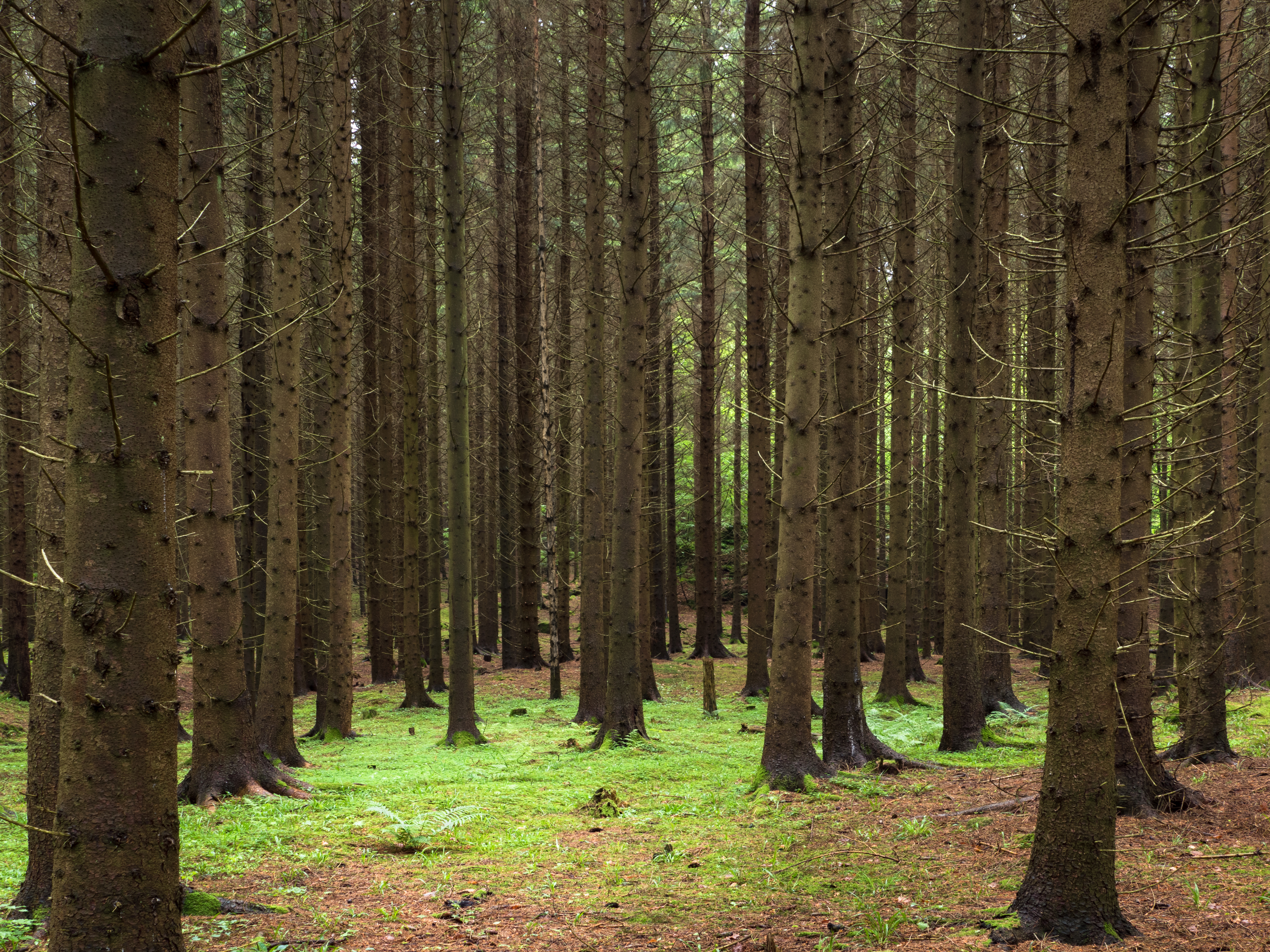
For much of the twentieth century, Norway spruce was planted across large areas of Bohemia and Moravia in dense monocultures. The rationale was straightforward — spruce grows quickly, its timber sells well, and it adapts to a range of soils. Decades later, those same monocultures are among the most vulnerable stands in Central Europe.
Research from the Czech University of Life Sciences and field observations by the Forestry and Game Management Research Institute consistently show that mixed-species stands recover faster from drought, storms, and pest pressure than single-species plantations.
Conifers still account for roughly 68% of the Czech productive forest area, though that proportion has declined steadily since 2010 as mixed and broadleaf planting has increased.
Ecosystem Notes
Resilience in a forest is not one thing. It's vertical structure, species mix, soil biology, and the connectivity between patches of older growth.
Forests with defined canopy, sub-canopy, shrub, and ground layers support far more species than even-aged monocultures. Each layer intercepts different amounts of rainfall and light.
Underground fungal networks link tree root systems, allowing the transfer of carbon and nutrients between individuals. Disturbance that compacts soil disrupts these connections for decades.
Isolated forest patches lose species over time. Corridors of native vegetation linking larger blocks allow wildlife movement, seed dispersal, and genetic exchange between populations.
Seasonal Notes
European beech turns gold and copper before dropping its leaves in October. In mixed stands, the contrast with remaining evergreen spruce and pine makes species composition immediately visible — something that's much harder to read in a uniform green canopy during summer.
Leaf litter from beech decomposes more readily than conifer needles, enriching soil faster and maintaining a higher pH. This is one reason foresters consider beech a soil-improving species in mixed planting schemes.
Tree Species OverviewContact
Questions about forest management topics, corrections, or content suggestions can be sent using the form below.